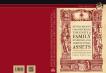
Instruments for Preserving the Unity of Family Business and Agricultural Assets: Perspectives of Legal History
Synopsis
The book examines from a legal-historical perspective the tools used to preserve the integrity of family farm or business assets. The aim of the authors is to identify the techniques used in different states to prevent the fragmentation of family property, to preserve the family character of the business and to keep it in family hands. These can be created by regulation (by the legislature), by contract or by asset management structures. The fundamental aim of the research is to identify possible historical models and what can be legally transposed into 21st century law.
Chapters
-
Argument
-
Trusts of Family Businesses: Historical and Modern Perspectives
-
Instruments for Preserving the Unity of (Family) Property: A Report From Austria
-
Instruments for Preserving the Unity of Family Businesses and Agricultural Assets: The German Perspective
-
Strategies for the Conservation of Family Wealth in Italian Legal Experience Between the 19th and 20th Centuries: The Case of the Fideicommissum
-
Agricultural Goods and Family Business: Legal and Economic Dynamics in the Formation of the Italian Civil Law Model in the First Half of the 20th Century
-
Historical Background to the Current Regulation of Fiduciary Substitution in Romania
-
A Legal-Historical Approach to the Mayorazgo: Origins, Evolution, and Current Implications
-
Possible Ways of Transferring Agricultural Holdings in Hungary
-
The Bata Empire at Crossroads
-
The 1926 Shareholders’ Agreement of the Renner Leather Factory – How to Govern a Large Transylvanian (Multi)Family Company in Turbulent Times
-
Would It Be Useful to Regulate Family Property? Brief Examination of a Proposal Emphasising the Reform of the Former Romanian Civil Code
Published
September 15, 2026
Copyright (c) 2026 Legal Heritage
How to Cite
Szilágyi, J.E. and Ilyés, K. (eds.) (2026) Instruments for Preserving the Unity of Family Business and Agricultural Assets: Perspectives of Legal History. Miskolc–Budapest: Legal Heritage. doi:10.54171/2026.jeszik.ipufbaa.